
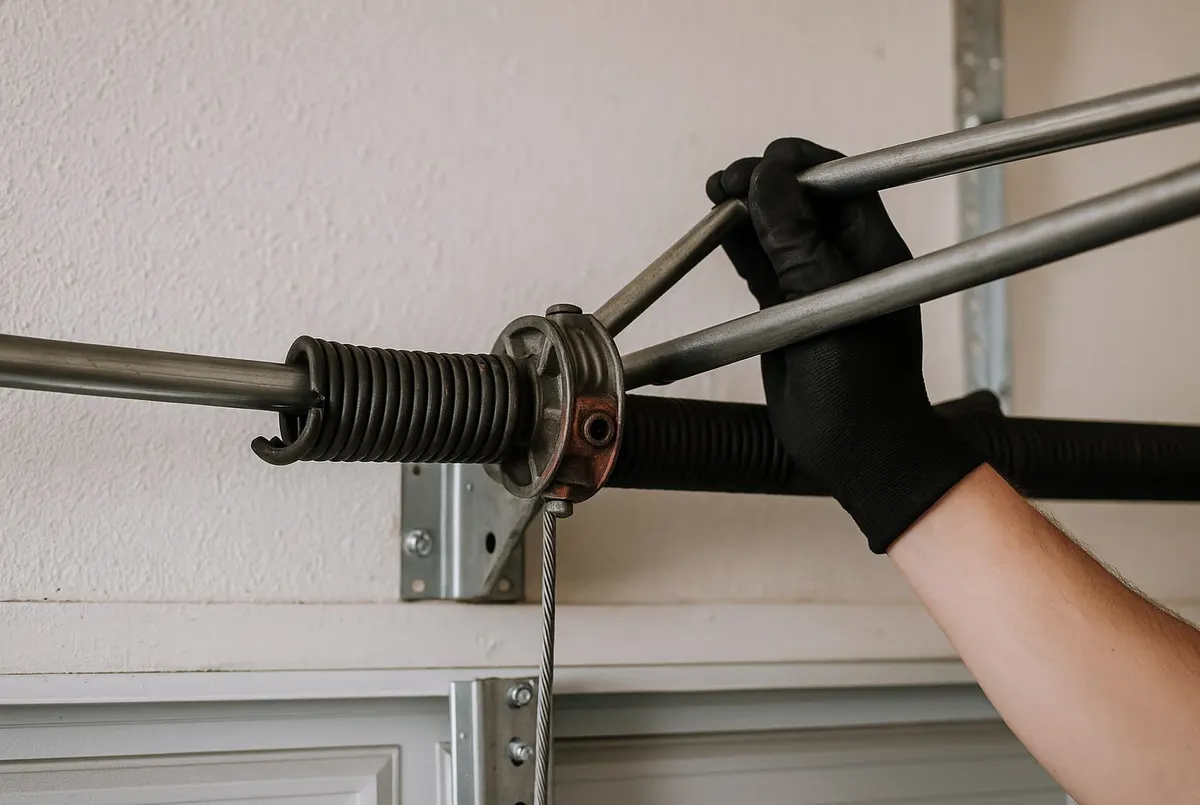
What a Technician Sees on a Typical Late-Fall Call
By the time the first hard frost hits, the service calls start sounding the same. A homeowner presses the opener and the door groans, jerks, or stops halfway. A spring that's been stretching a little more each year finally snaps on a fifteen-degree morning. A door that closed fine in September suddenly won't seal against the slab, letting a draft and a thin line of meltwater creep across the garage floor. On a lot of the older housing stock around here, with original doors and hardware that's never been serviced, these aren't surprises to a technician — they're the predictable result of a summer's worth of wear meeting the first real cold snap.
None of this is dramatic damage. It's small, overlooked maintenance that becomes a big deal the moment temperatures drop and freeze-thaw cycles start working on metal, rubber, and old wood. A little attention now, before the first nor'easter rolls through, prevents most of it.
Why Local Winters Are Hard on Garage Doors
This area doesn't get a mild winter. Snow, ice, road salt, and repeated freeze-thaw cycles all take a toll on a garage door system over a few months:
- Cold makes steel springs more brittle. A torsion spring that's near the end of its life is far more likely to snap in January than in July, simply because cold metal has less flex.
- Freeze-thaw cycles work on weatherstripping and seals. Rubber that's cracked or compressed won't flex back once temperatures swing, which lets in cold air, meltwater, and salt spray.
- Road salt and slush get tracked into the garage on tires and boots, and that salty moisture reaches tracks, rollers, and the bottom of the door panel, accelerating rust.
- Nor'easters bring wind-driven snow and sudden pressure changes that put extra strain on panels, especially on older doors that have thinner or warped sections.
- Older original doors and openers, common throughout New Hyde Park and nearby Floral Park, Garden City, and Mineola, were often installed with hardware that's never been upgraded to today's standards for insulation or sensor safety.
A Pre-Winter Checklist You Can Do Yourself
1. Inspect and Replace Weatherstripping
Walk around the door with the lights off during the day. Daylight showing through the bottom seal or around the sides means cold air, snowmelt, and salt spray can get in. Vinyl weatherstripping that's cracked, flattened, or pulling away from the track should be replaced before winter — it's inexpensive and takes less than an hour, but it's the single biggest factor in keeping a garage dry and above freezing.
2. Lubricate Hinges, Rollers, and Tracks
Use a silicone-based garage door lubricant, not household oil or WD-40, which can attract grit and gum up in the cold. Hit every hinge, roller bearing, and the track itself. This keeps moving parts from binding when metal contracts in low temperatures, and it helps push out moisture before it has a chance to freeze.
3. Check Spring Tension and Balance
Disconnect the opener (pull the emergency release cord) and lift the door halfway by hand. It should stay in place on its own. If it drifts down or feels heavy, the springs are losing tension — a sign they're closer to failure, and cold weather will likely be what finishes the job. Torsion springs are under serious tension and are not a DIY repair; this is a job for a trained technician.
4. Test the Opener, Sensors, and Auto-Reverse
Cold weather slows the chemistry in opener motors and can cause belt or chain drives to tighten or loosen slightly. Run the door through a few full cycles, watch for hesitation, and confirm the photo-eye safety sensors trigger reversal when something breaks the beam near the floor. Wipe down the sensor lenses — condensation and dust are common causes of false readings once humidity swings.
5. Clear and Inspect the Tracks
Remove any built-up grime, old lubricant, or debris in the tracks. Check for rust spots, especially near the bottom where salt-laden slush tends to pool. A wire brush and a rag with mild cleaner will usually take care of light surface rust; anything deeper or any visible bending in the track warrants a closer look before the door is asked to work through a winter's worth of snow loads.
6. Look at the Panels Themselves
Older wood or steel doors can have soft spots, warping, or small cracks that widen once they're repeatedly frozen and thawed. A panel that's slightly out of alignment in October will likely be worse by February. Catching this now, while repairs are straightforward, avoids a mid-winter breakdown.
When to Call New Hyde Park Garage Door
Some of this is reasonable for a homeowner to handle with a ladder and an afternoon. But if the door is unbalanced, a spring looks stretched or has visible gaps between coils, the opener is grinding or stuttering, or you're hearing a loud bang followed by a door that won't move at all, stop and call a professional. A snapped torsion spring under tension can cause serious injury, and it's one of the most common emergency calls technicians get once the weather turns.
New Hyde Park Garage Door handles pre-winter inspections, spring replacement, and garage door opener repair across New Hyde Park and the surrounding area, including Garden City, Floral Park, Mineola, Williston Park, Herricks, Manhasset, and Great Neck. A technician will check spring tension, test balance and opener response, inspect weatherstripping and tracks, and flag anything likely to fail once the cold really sets in — before it leaves a door stuck open in a snowstorm.
If your garage door has been acting up, sounding louder than usual, or just hasn't been looked at in a few years, now is the time. Call New Hyde Park Garage Door to schedule a winter check-up and keep your garage door working reliably through everything this season brings.